Dense parameters
Qwen 3.8 converted for local RKLLM inference.
ASLIX™ is a self-contained local AI platform combining voice, memory, geographic intelligence, vision and on-device inference without depending on cloud services.
This is not a cloud demo. The model is loaded and inferenced directly on the edge device.
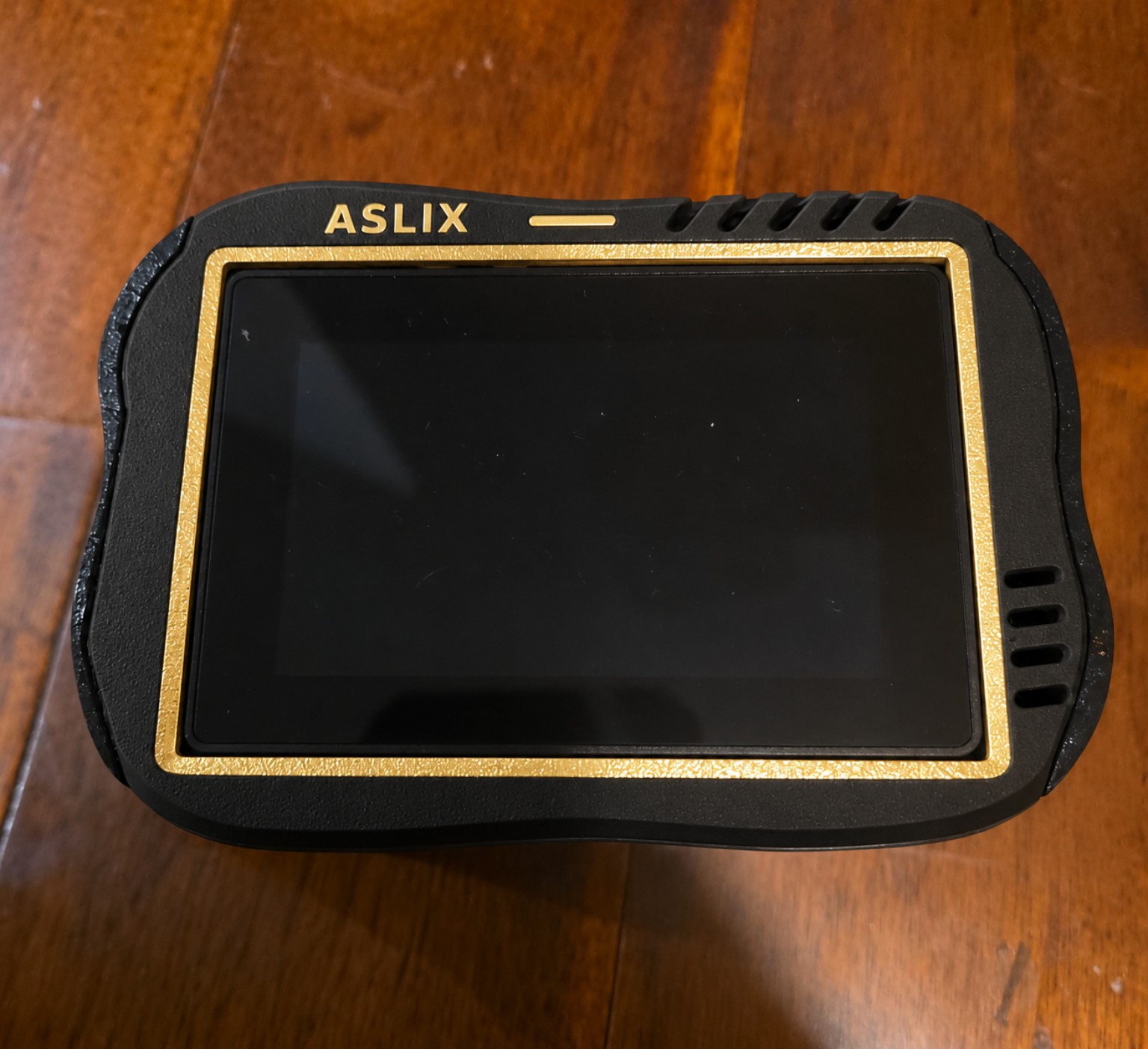
This project is tested on the physical NanoPi M6 platform, not simulated in a cloud environment.
Qwen 3.8 converted for local RKLLM inference.
Running through RKLLM Toolkit / Runtime 1.3.0.
All RK3588 NPU cores active for inference.
ASLIX and the local model sharing one compact device.
Measured on the physical NanoPi M6 during the current tested configuration. Numbers may change as optimization continues.
Local speech recognition and locally synthesized spoken replies.
Persistent local conversation and user context maintained outside the language-model process.
GPS, offline points of interest, location context and navigation-related functionality.
Local camera and vision-model workflows for image understanding when requested.
Local sensor information can be combined with AI responses while remaining on-device.
Models and optional workloads are coordinated around constrained edge memory and accelerator resources.
ASLIX is independently developed and tested on physical edge hardware. The project focuses on making capable local AI practical where privacy, connectivity and hardware constraints matter.
Public project information includes benchmark results, hardware configuration and reproducible observations. Proprietary conversion and deployment know-how is not published.
ASLIX is a trademark-pending project. Patent protection is being pursued for aspects of the system architecture and operation.
Nothing on this site is intended as a dedication of unpublished proprietary implementation details to the public.
ASLIX grew from independent research, open-source software, documentation, technical communities and developers willing to share what they learned.
20% of community-support contributions will be set aside to support open-source projects, independent developers and technical communities that helped make ASLIX possible. The remaining 80% supports continued ASLIX development, including hardware, testing, models, hosting and research.
The support program is not active yet. Distribution details and recipients will be published before contributions are accepted.
Engineering collaboration, project questions, licensing discussions and business inquiries are welcome.
aibender100@gmail.com